
If you stamp documents regularly, you've likely wondered whether to invest in a self-inking stamp or stick with a traditional rubber stamp and ink pad. Both get the job done, but they work quite differently, and which one you choose can dramatically affect your workflow, productivity, and long-term costs.
Let's walk through the real differences between these two stamping solutions so you can make an informed choice for your specific needs.
How Self-Inking Stamps Work
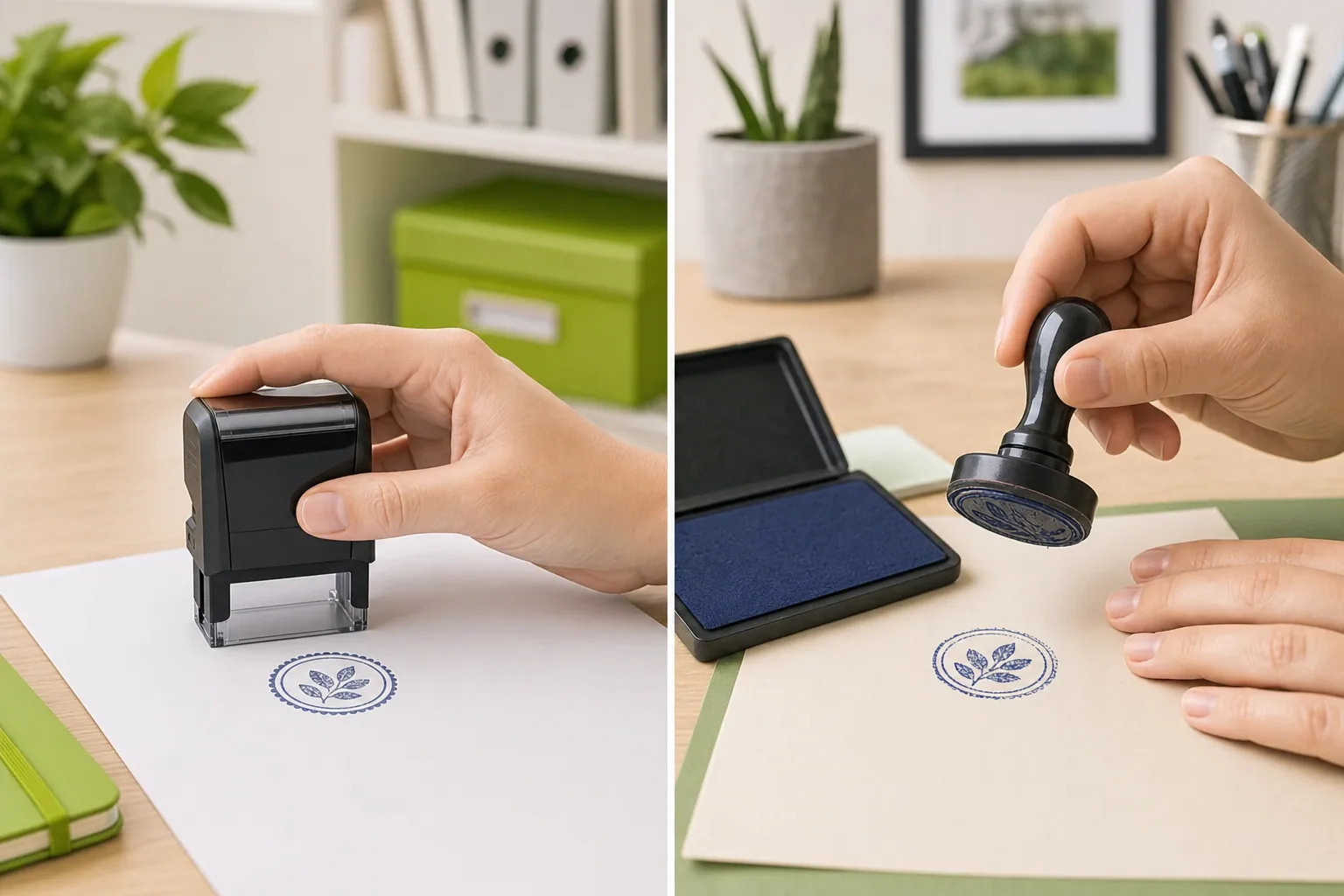
A self-inking stamp is a complete, self-contained unit. The rubber die and ink reservoir are built into one device. When you press the stamp onto a document, the handle retracts, the die contacts an internal ink pad, and the impression appears in one smooth motion. When you lift the stamp, the die automatically resets and re-inks itself for the next use.
This integrated design means there's no separate ink pad to manage, no risk of spilling ink, and no fumbling with multiple components. You simply press and lift, then press and lift again. For anyone stamping dozens or hundreds of documents, self-inking stamps eliminate friction from the process.
Creative Rubber Stamps specializes in high-quality self-inking stamps built by Ideal and Trodat, two of the most trusted names in the industry. These stamps are engineered to deliver clean, crisp impressions for thousands of uses while the internal ink lasts.
How Traditional Rubber Stamps Work
A traditional rubber stamp is just the rubber die itself. To use it, you place the stamp against a separate ink pad, press down to coat the rubber with ink, then press the stamp onto your document. It requires two separate motions and two different pieces of equipment.
Traditional stamps have been around for decades and work reliably if you don't mind the extra steps. However, they require more care: you need to store the ink pad separately, keep it from drying out, clean the stamp after use if you want to avoid ink buildup, and manage the pad's condition over time.
Speed and Convenience
If time matters in your workflow, self-inking stamps win decisively. There's simply no comparison when you're stamping dozens of invoices, approving stacks of paperwork, or processing documents all day.
With a self-inking stamp, you complete one action: press and lift. With a traditional stamp, you complete three: press to the pad, lift, then press to the document. Over a hundred stamps, that's hundreds of extra movements. Your hands, wrists, and back will thank you.
Many professionals, notaries, and small business owners discover that switching to self-inking stamps cuts their stamping time in half. When you process documents repeatedly, that efficiency compounds throughout your day.
Ink Management
One of the biggest practical differences is how you manage ink:
- Self-inking stamps: The ink is sealed inside the stamp. You don't refill until the internal pad runs out, which takes thousands of impressions. When you're ready to refresh, you can purchase refill ink designed specifically for your stamp model.
- Traditional stamps: You manage a separate ink pad that can dry out, leak, or become uneven over time. You may need to replace the entire pad or buy new ink pads more frequently.
Creative Rubber Stamps carries refill ink for both Ideal and Trodat self-inking stamps, so keeping your stamp working is straightforward and affordable. The water-based ink is designed to deliver consistent impressions without mess.
Durability and Longevity
Both self-inking and traditional stamps can last for years, but they fail in different ways. A quality self-inking stamp from Ideal or Trodat can produce thousands upon thousands of clean impressions before the rubber die wears out. The internal ink pad is replaceable, extending the stamp's useful life indefinitely.
Traditional rubber stamps also last a long time if cared for properly. However, they depend entirely on maintaining a separate ink pad, which is an extra component to monitor and eventually replace. If you lose or damage the pad, you've lost the functionality of your stamp.
Cost Considerations
At first glance, a traditional rubber stamp might seem cheaper because the upfront cost is lower. However, when you factor in the total cost of ownership, self-inking stamps often prove more economical:
- Self-inking stamps cost more initially but require fewer supplies long-term
- You buy refill ink only when needed, not replacement pads
- You save time, which is valuable in any professional setting
- Traditional stamps require ongoing pad maintenance and replacement
- The convenience factor reduces frustration and errors
If you stamp documents frequently, the productivity gain alone justifies the investment in a quality self-inking stamp.
When to Choose Each Option
Self-inking stamps make sense if you:
- Stamp documents daily or multiple times per week
- Need to maintain a professional appearance and consistency
- Want to reduce repetitive motion and save time
- Process high volumes of paperwork
- Prefer a clean, mess-free stamping experience
Traditional rubber stamps might suffice if you:
- Stamp documents only occasionally
- Have minimal budget constraints
- Don't mind the extra steps in your workflow
- Need specialized custom designs that traditional stamps can accommodate
Quality and Impression Consistency
One area where self-inking stamps truly excel is consistency. Because the ink reservoir and die work together as a sealed system, every impression looks the same. The internal pad ensures even ink distribution across the entire die, so your stamped text or logo always appears crisp and clear.
Traditional stamps depend on how evenly you coat the rubber with external ink. Inconsistent pressure or uneven ink coverage can lead to faded or blotchy impressions. For professional or legal documents where appearance matters, self-inking stamps deliver superior results.
Making Your Decision
The choice between self-inking stamps and traditional pads ultimately depends on your volume, frequency, and professional standards. Most busy professionals, notaries, and business owners find that self-inking stamps eliminate enough daily friction to make them a worthwhile investment.
If you're considering a custom stamp for your business or personal use, Creative Rubber Stamps can help you design a professional self-inking stamp that fits your exact needs. You'll receive a preview of your design before purchasing, and once your stamp arrives, it's ready to deliver thousands of clean, crisp impressions.
Ready to upgrade your stamping workflow? Explore custom self-inking stamp options and discover how much time and effort a quality stamp can save you.