
When you're a notary public, understanding what stamping tool you actually need is essential. Many notaries ask the same question: do I need a notary stamp, a notary seal, or both? The answer depends on your state's specific requirements and how you prefer to work. Let's clear up the confusion and help you make the right choice.
The Core Difference Between Stamp and Seal
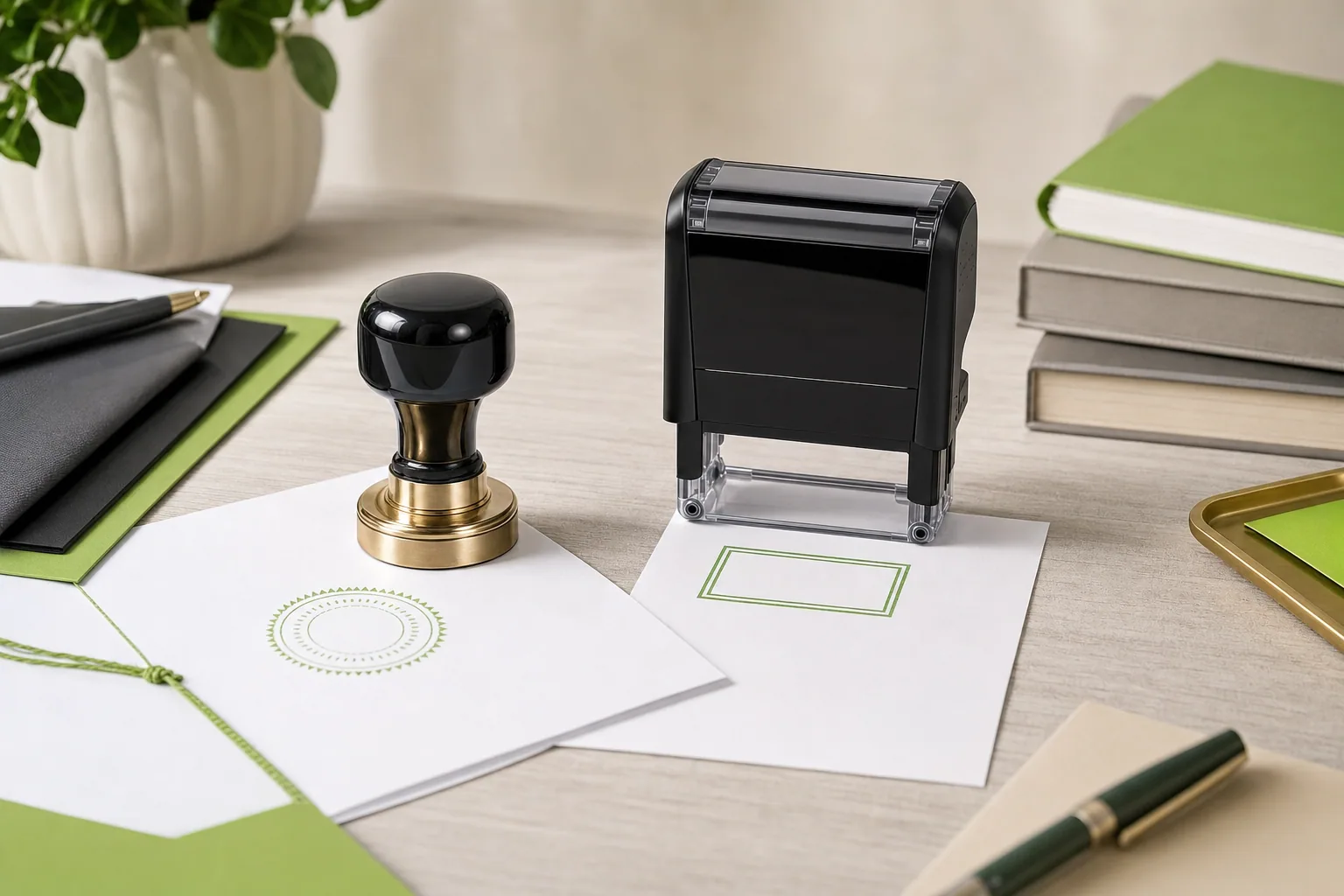
While notary professionals often use the terms 'stamp' and 'seal' interchangeably, they're technically different tools. A notary stamp is a self-inking device that marks documents automatically with a single press, leaving an inked impression on paper. A notary seal is traditionally a mechanical embosser that creates a raised, three-dimensional impression without ink, pressing into the paper itself.
However, many states have moved away from requiring the embossed seal format. Today, most notaries use self-inking stamps that provide crisp, clear impressions with far less effort. Creative Rubber Stamps specializes in professional-grade self-inking stamps that deliver the clean, professional marks you need for every notarization.
What Your State Actually Requires
The short answer: it depends on which state you're notarized in. State governments set their own notary public stamp requirements, and they vary significantly. Some states mandate a specific format, size, or shape for your notary impression.
Generally, your notary impression must include:
- Your name as a notary public
- The state where you're commissioned
- Your commission expiration date
- Sometimes your notary ID number or other identifying details
Some states require a round seal format, while others accept rectangular stamps. A few still demand both an ink stamp and an embossed seal for maximum security. Before ordering, check your state's specific notary public stamp requirements to ensure full compliance. What works in one state may not meet another state's standards.
Self-Inking Stamps vs Embossed Seals
If your state allows a choice, self-inking stamps offer real advantages over traditional embossers.
Self-inking stamps:
- Leave bold, readable impressions with every use
- Require no external ink pad or extra steps
- Work on multiple page types, including thin documents
- Last for thousands of impressions before refilling
- Cost significantly less than embossers
- Are faster and cleaner to use throughout the day
Embossed seals:
- Create a raised impression that's difficult to forge
- Require more pressure and effort per document
- Can't be used effectively on certain papers or carbon copies
- Leave a three-dimensional mark that adds security
- Are slower for high-volume notarizing
Most modern notaries prefer self-inking stamps. They're practical, efficient, and produce impressions that are just as legally binding as embossed seals when your state allows them.
Choosing the Right Size and Format
Once you understand your state's core requirements, you'll need to decide on size and shape. Most notary stamps come in two formats: rectangular (which many states prefer for quick, efficient stamping) or round (which some states require by law).
Size matters too. A larger impression is easier to read and stands out clearly on documents. A smaller stamp is more portable and takes up less space on the page. Consider how often you notarize and whether you work in an office, mobile setting, or both.
When ordering a custom notary stamp, work with a provider who offers a preview before you purchase. Creative Rubber Stamps provides a preview of your stamp before final production, so you can verify the layout, font, and impression quality match your state's exact requirements. This step prevents costly mistakes and ensures compliance.
Stock Stamps vs Custom Stamps
If you just need a standard notary stamp with your name and state, a custom-made stamp is your best option. Custom stamps can include up to nine lines of text and let you arrange your name, state, commission number, and expiration date exactly as required.
Stock stamps work if you want a common message like 'APPROVED' or 'RECEIVED', but for notary work, a personalized stamp is essential. Your stamp must reflect your specific credentials, so custom is the way to go.
Keep Your Stamp Working Long-Term
Once you've chosen and ordered the right stamp, maintaining it ensures years of use. Professional-grade self-inking stamps from Creative Rubber Stamps deliver thousands of crisp impressions before the ink needs refreshing.
When the impressions start looking faint, simply refill the ink pad. Having replacement ink on hand means you'll never be caught without a working stamp during a busy day. Creative Rubber Stamps offers refill ink formulated for Ideal and Trodat brand stamps, the same reliable brands used to create your original stamp.
Regular maintenance takes just minutes and extends the life of your stamp indefinitely. It's one of the smartest investments a notary can make.
Making Your Final Decision
The notary stamp vs seal question has a straightforward answer when you check your state's requirements first. Most notaries today find that a professional self-inking stamp meets all legal requirements while offering speed, reliability, and ease of use that embossed seals simply can't match.
Take time to verify what your state requires, decide on the format and size that works for your workflow, and order a custom stamp with a preview so you can approve it before production. Creative Rubber Stamps has over 45 years of design experience and specializes in notary stamps that pass state compliance standards and produce clear, professional impressions every single time.
Ready to get the right stamp in your hands? Order your custom notary stamp today and start notarizing with confidence.